
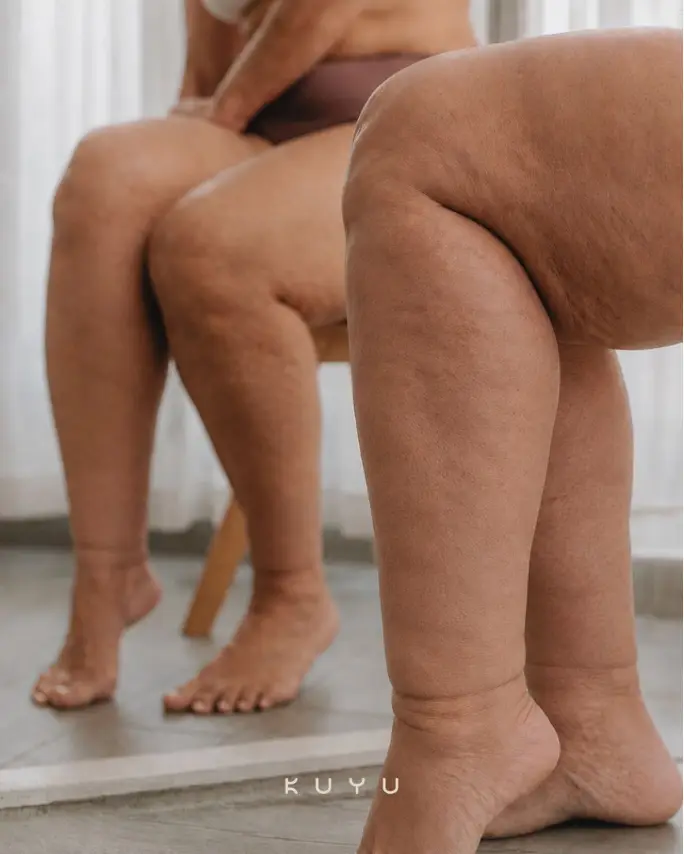
If you’ve recently heard the word lipoedema, or you suspect it might explain what’s been happening in your body, you’ve probably also come across the idea of stages. Understanding them can be really helpful, as long as you know what they do, and don’t, tell you.
A quick reminder: what is lipoedema?
Lipoedema is a chronic condition where fat builds up in a disproportionate way, most often in the legs, hips and buttocks, and sometimes the arms. The hands and feet are usually spared. It almost always affects women, often appears or changes around puberty, pregnancy or perimenopause, and doesn’t respond to diet and exercise in the way ordinary weight gain does. Many women also experience heaviness, tenderness and easy bruising.
The four stages of lipoedema
Stages describe how the skin and the tissue beneath it look and feel. They are a way of describing change over time, rather than a measure of how much pain you have.
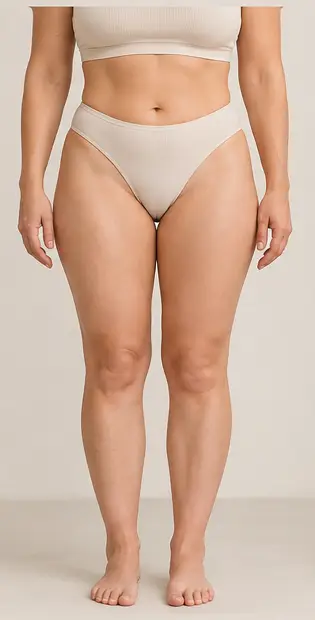
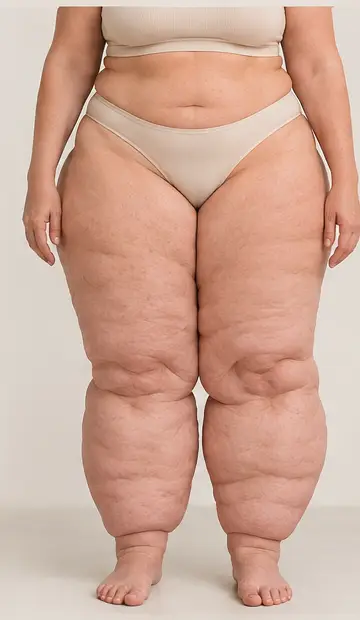
Stage 1
The skin surface looks smooth, but the layer of fat beneath it is thickened. You or your practitioner may be able to feel small nodules under the skin, a little like grains of rice or peas. At this stage, lipoedema is often mistaken for ordinary weight gain.
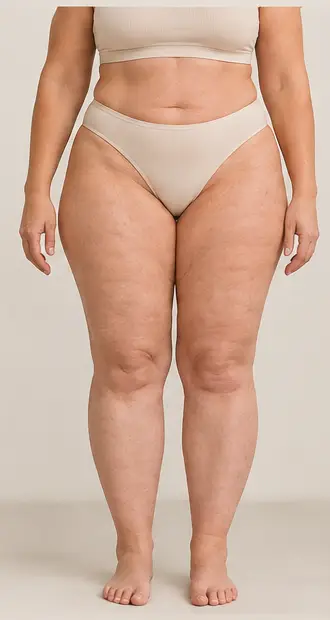
Stage 2
The skin becomes more uneven, with a dimpled or “orange peel” texture. The nodules beneath are larger, and the shape of the legs or hips may start to look more noticeably out of proportion with the rest of the body.
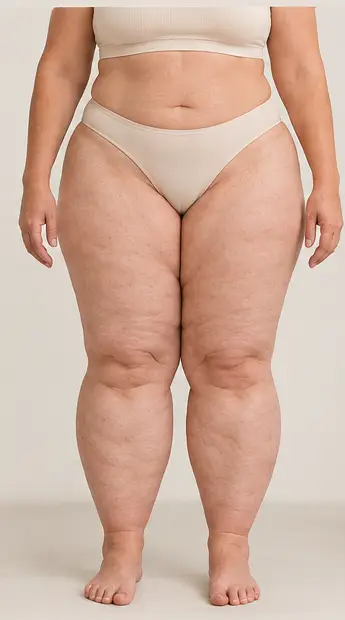
Stage 3
The tissue becomes larger and more pronounced, forming lobes or folds of fat, often around the thighs and the inner knees. These can change the shape of the limb and may make walking or moving more uncomfortable.
Stage 4
Lipoedema is present alongside lymphoedema, where the lymphatic system becomes overloaded and fluid builds up in the tissues. This is sometimes called lipo-lymphoedema. At this stage, care is usually led by a lymphoedema therapist and your medical team.
Types: where lipoedema appears
Alongside stages, lipoedema is often described by type, which simply refers to the areas of the body affected:
- Type I: pelvis, buttocks and hips
- Type II: buttocks to the knees, often with folds around the inner knee
- Type III: buttocks to the ankles
- Type IV: the arms
- Type V: the lower legs
It’s common to have more than one type at the same time.
What the stages don’t tell you
- Stage isn’t the same as pain. Someone in stage 1 can feel more heaviness and tenderness than someone in stage 3. How you feel matters just as much as how your legs look.
- Lipoedema doesn’t always progress. Not everyone moves through every stage, and recognising it early gives you more choices about how to look after your body.
- A stage is a description, not a judgement. Every stage deserves understanding and care.
Getting a diagnosis
Only a doctor can diagnose lipoedema and tell you which stage and type you are. If this sounds familiar, speak with your GP and ask about a referral to a practitioner who understands lipoedema. It can help to bring photos, notes on when you first noticed changes, and any family history, as lipoedema often runs in families.
Where lymphatic care fits
Lymphatic drainage doesn’t remove lipoedema fat, and it isn’t a cure. What many women find is that regular lymphatic care, alongside their medical care, compression and gentle movement, helps their legs feel lighter, less heavy and more comfortable. At KUYU Body, every session begins with a conversation, and the work is always adjusted to what feels right for your body on the day.
If you’re living with lipoedema and would like a calm, understanding space to look after yourself, book a FLOWTOX™ session or get in touch first. You can also read Kirby’s lipoedema story.
This article is general information only and isn’t medical advice. Please speak with your GP or specialist about diagnosis and care for lipoedema.